
Chest pain can be worrying, especially when there’s a potential threat of heart or lung conditions. But if those have been excluded by your doctor, the pain may be musculoskeletal. In this case, the culprit might be the joints between your ribs and breastbone. This is known as costochondritis.
What is Costochondritis?
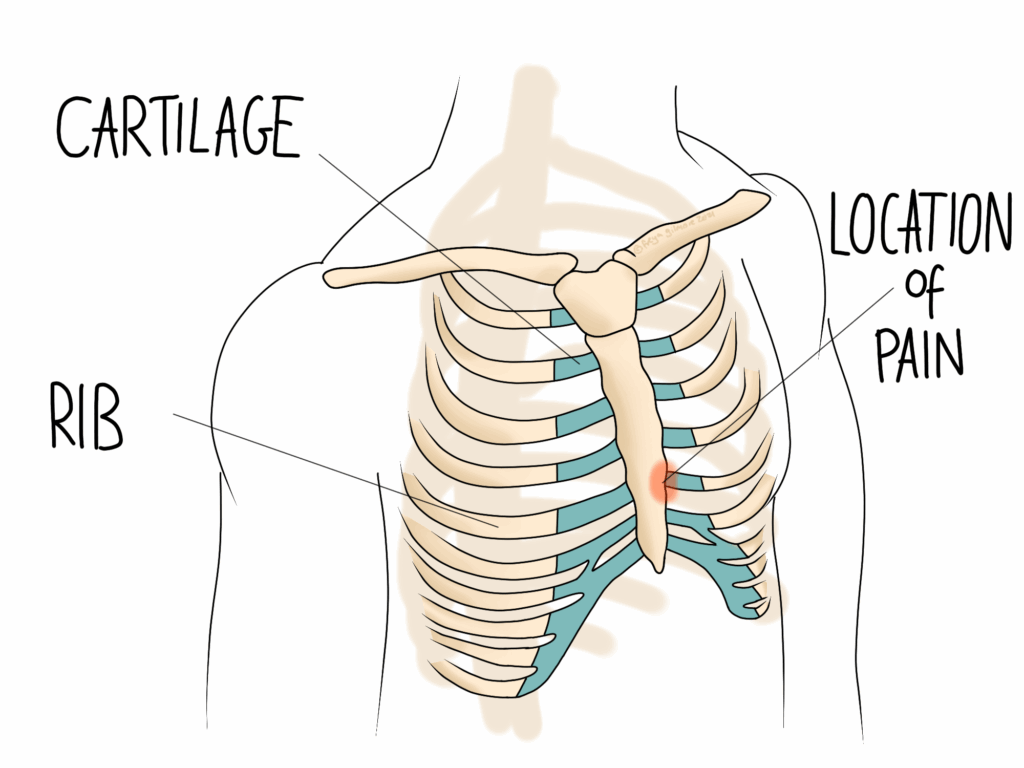
Costochondritis is a painful condition caused by inflammation. This is focused to the cartilage where a rib attaches to the sternum (breastbone). It’s a relatively common cause of non-cardiac chest pain and can be difficult to pin down, as symptoms often start suddenly and may come and go without an obvious trigger.
The condition usually affects the upper five ribs. Pain can range from a sharp stab to a dull ache or even a sensation of pressure. Some people notice the pain only when the area is pressed. It often worsens with deep breathing, coughing, or sneezing.
Although not dangerous in itself, costochondritis can be persistent, and it can mimic more serious causes of chest pain. This is why medical screening is an important first step.
Causes and Triggers
For many people, the onset of costochondritis seems random. However, some common factors include:
- Repetitive activity, such as lifting, painting, or moving furniture
- A recent respiratory illness that involved heavy coughing
- Trauma to the chest, even minor bumps or strains
- Possible links with vitamin D deficiency or systemic conditions like fibromyalgia
The inflammation can also alter the way the ribs move at the back of the chest, sometimes leading to secondary pain or stiffness in the upper and mid-back.
Related Conditions
Other rib joint problems can feel similar, and it’s worth knowing the differences:
Tietze Syndrome – Like costochondritis, this involves inflammation at the rib-sternum joint. The key difference is visible swelling and heat at the painful spot. It is considered rare, but your osteopath will check for it if symptoms match.
Slipping Rib Syndrome (SRS) – This affects the lower ribs, which have looser connections at the front of the chest. The rib tip can become hypermobile, irritating nearby muscles or nerves. Pain is often lower in the chest or upper abdomen, and may feel sharp or catching.
Managing Costochondritis
The good news is that costochondritis is usually self-limiting, meaning it often resolves on its own within weeks to months. But that doesn’t mean you have to just put up with the pain in the meantime. Simple measures like applying a cool compress (e.g. a bag of frozen peas wrapped in a tea towel for up to 10 minutes) may help calm inflammation. Your GP or pharmacist can also advise on suitable anti-inflammatory medication if appropriate for you.
Osteopathic treatment may support recovery by:
- Improving mobility at the rib joints and spine
- Reducing secondary strain in the back and shoulders
- Advising on posture, movement, and exercises to minimise irritation
- Helping you identify aggravating activities, and ways to adapt them
Chest pain is always something to take seriously, but once more serious causes have been excluded, costochondritis is a manageable condition. If you have rib or chest pain that matches the description above, we can help you feel more comfortable while your body heals.
Book an appointment with Beverley in Umm Suqueim here for your chest pain