
Often mistaken for a trapped nerve, referred pain causes aches and pains beyond the problematic area. When the lower back or pelvic joints are involved, it can cause an ache down the thigh as far as the calf; but a few details make it easy to distinguish from true sciatica.
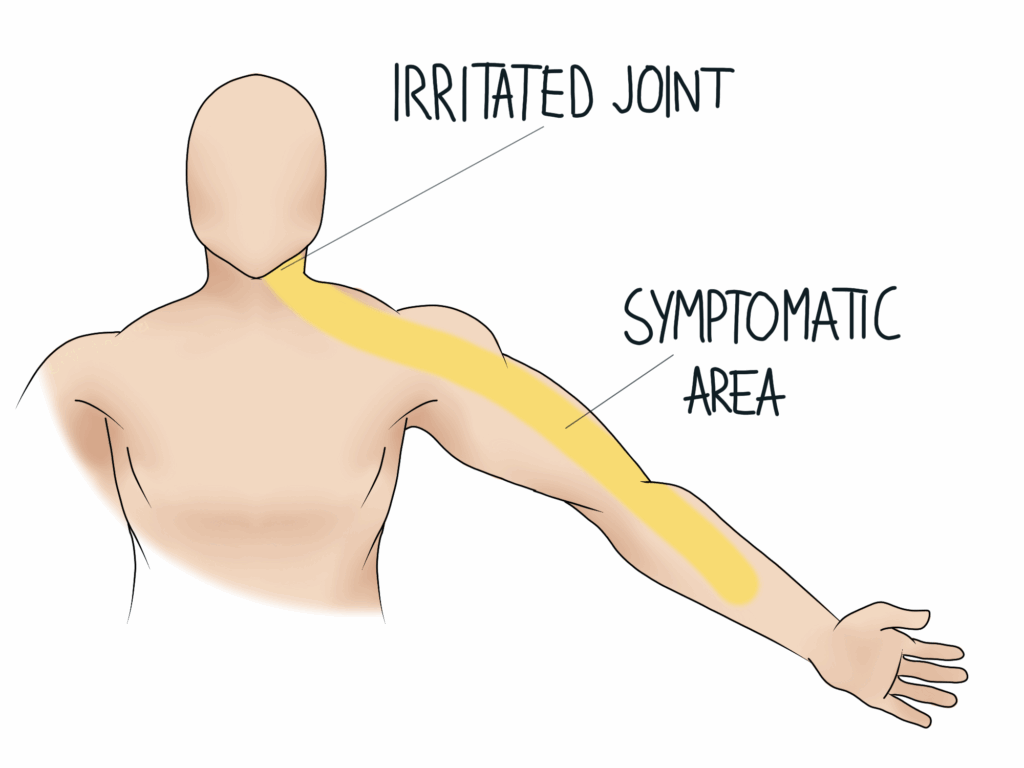
What is Referred Pain?
Any area of the body can be subjected to referred pain. When the brain receives a pain signal, it is aware of which nerve has sent the message. Sometimes it misinterprets the signal is coming from another area supplied by that nerve. One example that you may be familiar with is when someone has a heart attack and they feel pain in their shoulder or jaw but not in their chest. That is referred pain.
How do I know if I have a Trapped Nerve or Referred Pain?
Although nerves are already involved in referred pain, they don’t cause typical nerve pain symptoms. In contrast: a trapped nerve like sciatica, or a disc in the spine pushing on a nerve, would cause more dramatic symptoms. Neurogenic (nerve) pain is typically sharp shooting or maybe described as electric. It can also come with sensation such as pins and needles, or a feeling of running water or insects on the affected area. It might also present with weakness or numbness.
The precise location of your symptoms is also a giveaway for your osteopath in whether or not the pain is coming from the trapped nerve. When a nerve is trapped, the pain the symptoms are felt along the course of that nerve. Using sciatica as an example again, the pain will always be felt somewhere along:
- the back of the thigh
- the outside or back of the calf
- and potentially into the foot.
A different nerve can be trapped, which would cause pain in the front of the thigh. But typically, if the cause is a problem in the lower back rather than a nerve itself, the location of pain would follow a different recognisable pattern.
Expected Symptoms
We would expect to see pain of more of a dull character, potentially with episodes of sharpness on certain movements. Pins and needles, numbness and weakness and much less likely to manifest. The area where the pain is felt should not be tender to touch. There will be further clues in the aggravating and relieving factors that you’ve found. Movement, or a cool compress at the problematic area will have an effect on the area where you feel the pain.
Osteopathy and Referred Pain
Fortunately, there are plenty of signs and symptoms that will direct your osteopath to the true cause of your pain. With this diagnosis completed, treatment is much the same as for a similar problem without the referral. A combination of techniques to work on both muscle and joint are typically a good starting point. You can expect to leave with a diagnosis and thorough explanation of your pain and why you’re feeling it. Exercises and lifestyle advice are often appropriate to encourage further improvement between sessions and provide additional relief.
Click here to make an appointment with Beverley in Umm Suqueim