
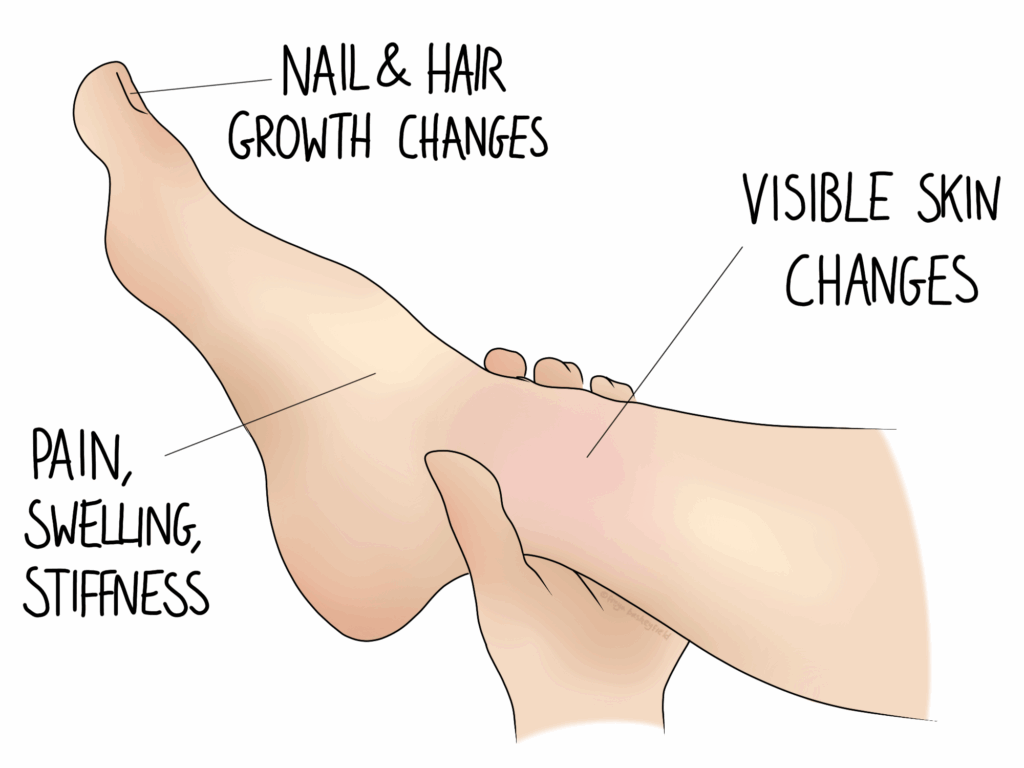
CRPS is a pain science condition characterised by physical symptoms alongside the pain. It typically affects an area of the body that may have recently had a small injury, like a mild sprain. CRPS symptoms can include severe pain, changes to skin colour, external feelings of warmth or cold, and changes in hair or nail growth.
What Causes CRPS?
Like many pain conditions, there will be a number of factors involved and we will not always know all of them. Often, CRPS follows a traumatic event even if only mild. Something like a fall could be the trigger, or even emotional traumas like bereavement or grief. Once the initial injury has healed, the pain persists and may change in its severity or character. It is then joined by the additional symptoms above.
The pain of CRPS can be agonising. A combination of increased sensitivity to painful stimuli (hyperalgesia) as well as a pain response to typically non-painful stimuli (allodynia) is expected. This combination can make it hard to know where to start with making yourself more comfortable.
Ultimately, pain conditions like this are a subconscious brain response. For whatever reason your brain believes that this area is in danger and needs protecting. At a high level, the solution is to teach the brain that it’s not under threat. This can be a long journey, as there will undoubtedly be some discomfort along the way. It’s important that we keep you as comfortable as possible though, as too much pain will only reinforce the brain’s idea of danger.
Diagnosis
The first hurdle is diagnosis. This can be tricky, as the condition transcends a purely pain-based picture characteristic of something like fibromyalgia. The physical symptoms might send your clinician down a rabbit hole looking for remnants of the original injury, or potentially an inflammatory rheumatological condition. The “C” in CRPS stands for chronic, which refers to a duration of 3-6 months or more. Once you pass this milestone, a diagnosis may be easier to find. At this point, the brain starts to process pain differently. Now it’s less likely that the pain you feel is related to tissue damage as such, so your clinician should be thinking more about pain science.
Managing CRPS
The best way to speed things along is through a multidisciplinary approach. Speak to GP to make sure that you’re in the system, and to give you access to medication that you may benefit from. Talking therapies can be very beneficial as well. Hands on therapies like osteopathy can help to desensitise the area and remind the brain that there is no danger. Beverley’s gentle treatments aim to gradually train the subconscious brain into understanding that it’s safe. Initially, it’s likely that the pain will be too severe to apply much pressure or achieve much movement. But over time, we expect your pain and other symptoms to subside. Beverley can also offer lifestyle advice and exercises to help you see the back of your CRPS sooner.
Click here to make an appointment for your pain in Umm Suqeim with Beverley