
Lower Cross Syndrome shares a lot of similarities with Upper Cross Syndrome. Both describe predictable patterns of muscle imbalance that develop in response to modern lifestyles. Whereas UCS affects the shoulder girdle, LCS acts on the pelvic girdle. Beverley frequently sees lower cross patterns contributing to low back, hip, and pelvic pain. However, the label is only part of the diagnosis: getting to the root of the problem means responding to the real reason it’s developed.
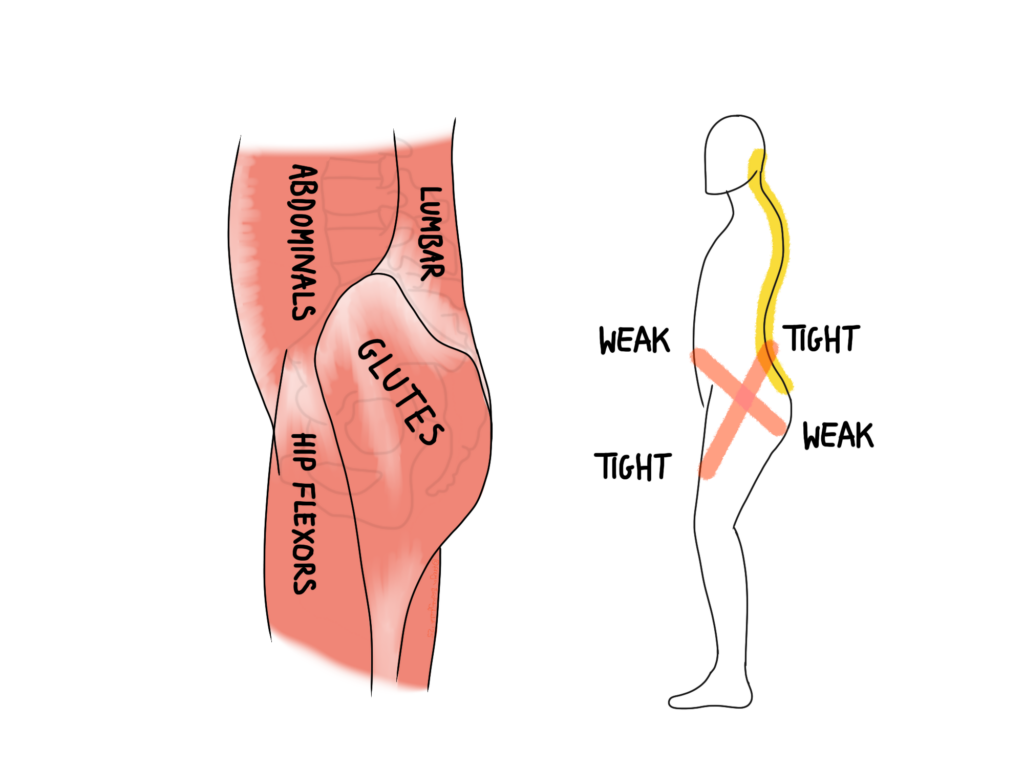
What Is Lower Cross Syndrome?
Lower Cross Syndrome describes a pattern where certain muscles become overactive and tight, while others become inhibited and weak. Typically:
- Tight or overactive: hip flexors (quadriceps, psoas) and lower back muscles
- Lengthened or weakened: abdominal muscles and gluteals
This imbalance alters pelvic position, often increasing the curve in the lower back and changing how load is distributed through the spine and hips.
Why It Develops
Prolonged sitting is a major driver. Hip flexors remain shortened, gluteal muscles are underused, and the nervous system adapts accordingly. Over time, this can lead to:
- Persistent lower back pain
- Hip stiffness or pain
- Reduced core control
- Increased strain during lifting or exercise
As with Upper Cross Syndrome, this is not about “bad posture”, but about how the body adapts to repeated positions and demands. Stillness is the problem, which is difficult for things like long periods of driving. At least with a desk you might be able to cycle through a number of postures over the working day. Frequent breaks from sitting still are important, and ensuring that at the end of a long day, you don’t continue to sit or hunch over.
How It Relates to Upper Cross Syndrome
Upper and lower cross patterns often coexist. A forward-head posture and rounded shoulders above can be mirrored by pelvic tilt and altered spinal mechanics below. Beverley views the body as a single system, aware that treating one area without considering the other often limits progress.
How Beverley Approaches Treatment
Beverley’s osteopathic treatment focuses on restoring balance rather than forcing correction. This may include:
- Gentle joint mobilisation to improve spinal and hip movement
- Soft tissue work to reduce unnecessary muscle tension
- Supporting better pelvic control during everyday movements, including ergonomic advice
Importantly, treatment is paired with targeted exercise advice. Strengthening underactive muscles and reducing reliance on overworked ones helps create lasting change. You might spend half an hour a fortnight in the treatment room, but you can do ten minutes of exercises daily. Prescribed exercises are tailored for you specifically, and can be altered as your symptoms and tensions change over time.
Moving Better, Not Sitting “Perfectly”
Rather than encouraging rigid postural rules, Beverley helps patients understand variability. Changing position regularly, moving confidently, and loading the body appropriately are far more important than holding a single “ideal” posture.
Lower Cross Syndrome is a pattern that can be improved. Beverley’s aim is to help your body move more efficiently, with less strain, so pain becomes less likely to return.
Click here to make an appointment for your aches and pains in Uum Suqueim