
Coccydynia is the medical term for pain around the coccyx, or tailbone. It can make sitting uncomfortable, particularly on hard surfaces, and may cause pain when moving from sitting to standing. In some cases, symptoms only last a few weeks weeks. In others, the pain can continue for months or even years. Beverley is experienced in helping people with persistent musculoskeletal pain, helping them understand the factors that may be contributing to their symptoms and developing a management plan together.
What causes Coccydynia?
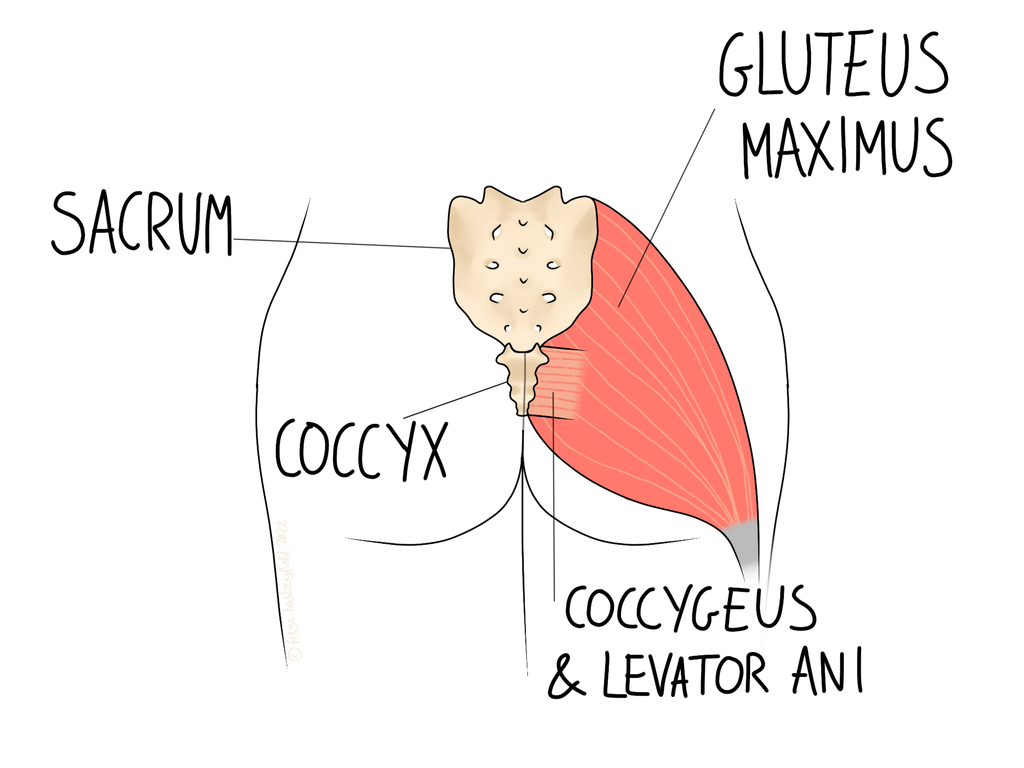
Coccydynia often develops following a fall onto the bottom or another direct impact, but an obvious injury is not always involved. Prolonged sitting, repetitive pressure, changes in pelvic mechanics and increased tension in the surrounding muscles can all contribute. Although the coccyx is small, it connects to ligaments and muscles, playing an important role in the integrity of the pelvic floor. Irritation or restrictions in this area can therefore have wide-reaching effects.
Persistent or unexplained tailbone pain should be medically assessed where appropriate, particularly if it is worsening or accompanied by other concerning symptoms.
The Pelvic Floor Connection
The pelvic floor is a group of muscles and connective tissues. It supports the pelvic organs and contributes to continence and pelvic stability. Pregnancy and childbirth can alter its function, while hormonal changes around menopause can affect tissue health. Importantly, pelvic floor problems do not always involve weakness: muscles that are excessively tense or struggle to relax may also contribute to pain. This means a “one size fix all approach” of strengthening these muscles will never be suitable for everyone. These points can be relevant when tailbone pain occurs alongside pelvic discomfort, hip symptoms or lower back pain.
Lower Back Pain and Coccydynia
The coccyx sits at the base of the sacrum, which connects the spine to the pelvis. Movement and muscle activity across these areas influence the distribution of forces when sitting, standing and moving. Stiffness, altered movement or muscular tension around thepelvis may contribute to discomfort, although these findings do not necessarily mean that the coccyx itself is misaligned. Beverley will look locally, and further afield to identify the relevant factors in your case.
How can Osteopathy Help?
Beverley uses external osteopathic techniques only; internal treatment is not part of her approach. Treatment often involves stretches, massage, and exercises to reduce excess tension around the lower back, sacrum, hips and gluteal muscles, with the aim of reducing unnecessary strain and improving comfort. Strengthening exercises aim to improve stability and restore balance between muscle groups.
Practical advice may also include modifying sitting positions, using a coccyx cushion, taking regular movement breaks, and gradually returning to activities that have become uncomfortable.
Longstanding tailbone pain can be frustrating, but it does not mean that improvement is impossible. By identifying relevant contributing factors and tailoring treatment to the individual, Beverley aims to help patients move more comfortably and manage everyday activities with greater confidence.
If tailbone pain is affecting you, book an appointment in Umm Suqeim with Beverley to start making progress.