
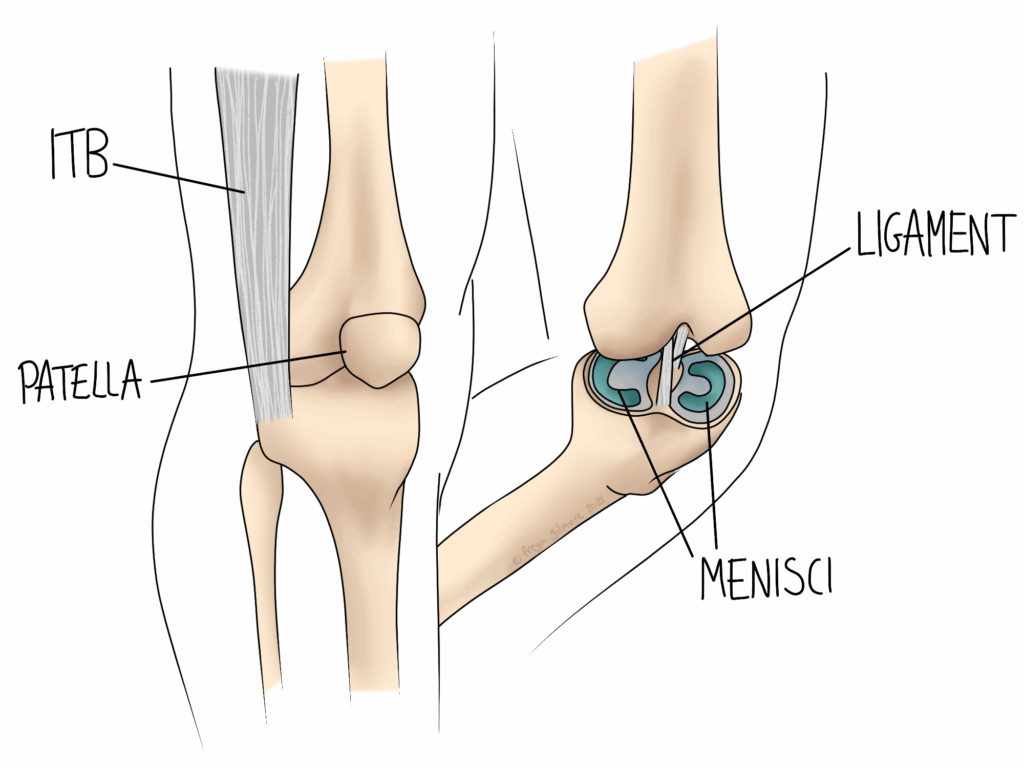
The knee is made of a few joints, supported by ligaments, cartilage, and muscle. Any of these can be susceptible to injury and sometimes these issues come in groups. Your osteopath can diagnose and treat at your first appointment, so you don’t need to wait for a referral to start getting on top of your knee pain.
Ligament Sprains in the Knee
The four main ligaments of the knee are:
- Anterior cruciate
- Posterior cruciate
- Lateral collateral
- Medial collateral
These ligaments sit either within the main knee joint or either side of it. Their role is to limit movement and provide stability. During extreme or repetitive movements, they can be sprained. Low grade sprains generally respond well to conservative treatments like manual therapies and exercise. More severe ones may need surgery.
Low grade sprains might not cause you too many direct issues, but they might cause other areas to compensate. Proper rehabilitation can prevent further issues with the injured ligaments themselves, but also take the strain off other areas of the body that may or may not be symptomatic yet. Exercises to strengthen the ligaments and surrounding muscles are likely to make up part of your management plan. It might also be appropriate to give you exercises to improve joint mobility too. Your plan will be tailored for you specifically, based on your full history, goals, and examination.
Muscle and Tendon Issues around the Knee
Muscles and tendons can be injured to various degrees. These are known as strains (in contrast to ligaments, which suffer sprains).
A common issue that stems from muscle tension in the quads is Patella Maltracking. This is where the knee cap moves out of the groove in the thigh bone. It causes a grating pain, which can catch and make your leg feel like giving way. Typically it’s weakness in the quadricep muscle closest to the inside of the thigh that allows other muscles to pull the knee cap out of from position. Fortunately, this is often easily resolved by balancing the strength between the quadricep muscles. Your osteopath can give you the necessary exercises and support the rest of the knee as you improve.
Meniscus Tears
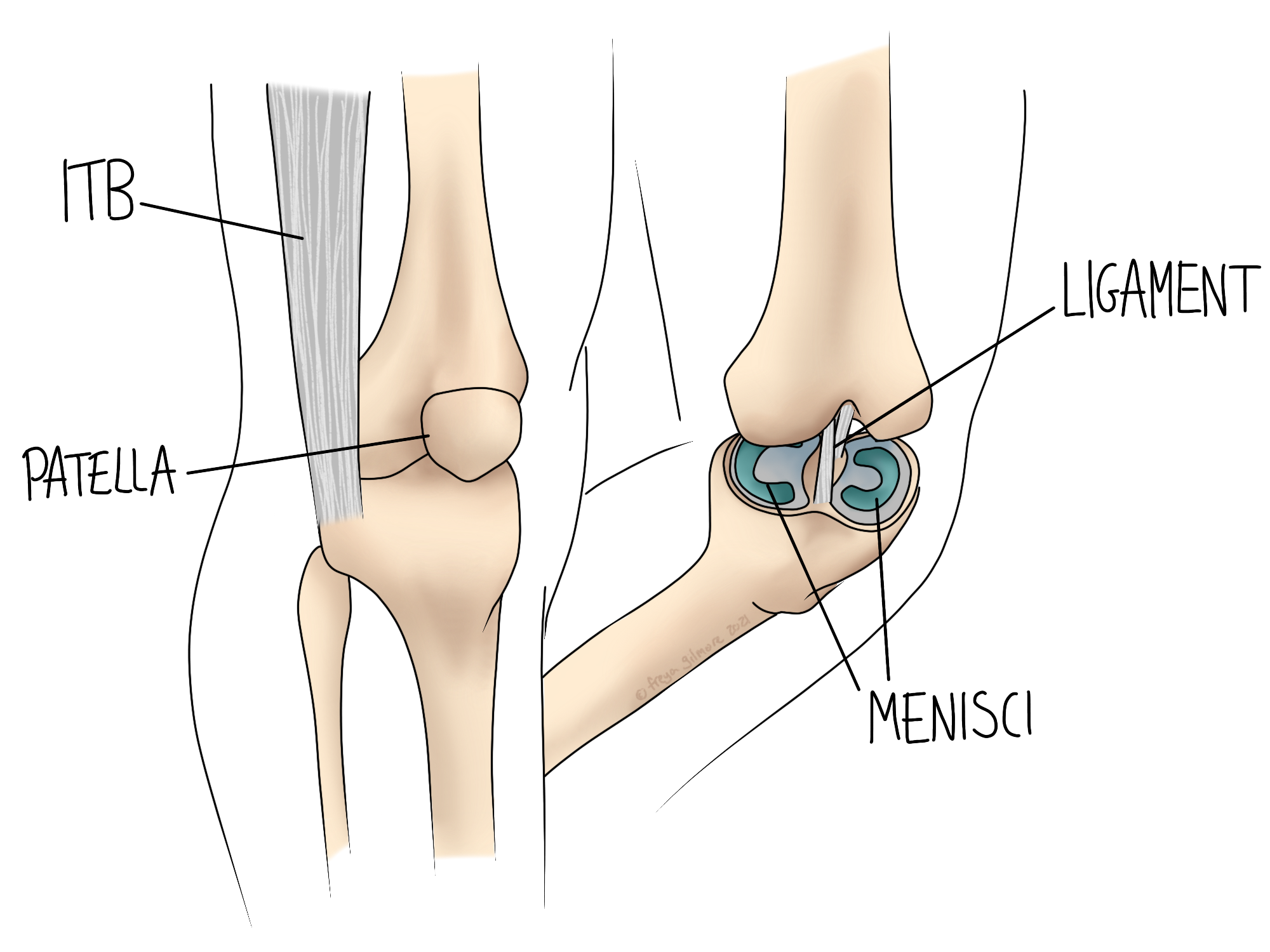
The image above shows the menisci as two c-shaped pieces of cartilage within the main knee joint. They help to keep the knee stable, but can be torn by twisting through the knee while weightbearing. Meniscus tears are common in sports like football, where the planted leg can be subject to that force when kicking with the other. Depending on the shape of the tear, it might present with
- intermittent pain deep in the knee
- clicking
- getting stuck at a degree of flexion
Menisci have a poor blood supply and can take a long time to heal. Surgery is not necessary in all cases, but imaging might be helpful.
Osteopathy for Knee Pain
For minor sports injuries, osteopaths are in a great position to help. We look at the body’s function beyond the knee, so we can see what other factors might have an effect. Maybe there’s an old ankle sprain that changes your gait, or you always carry your bag on one side? Beverley’s comprehensive case history will identify seemingly unrelated elements that might turn out to be a key part of a long term strategy. If you’re looking to resolve your pain at a deeper level, book in below.
Click here to make an appointment for your knee pain in Umm Suqueim with Beverley