
Calcific tendinopathy is a condition where calcium deposits develop within a tendon, most commonly in the shoulder. The presence of calcium deposits don’t necessarily mean you’re consuming too much calcium. It is a distinct tendon condition associated with injury or wear and tear. Symptoms can range from a mild ache to severe pain that impacts your day-to-day function significantly.
What Causes Calcific Tendinopathy?
Tendons are the tissues that connect muscles to bones. In calcific tendinopathy, part of the tendon undergoes changes that lead to calcium crystals being deposited within it. It’s still not clear why they become susceptible. It may be part of the healing process after injury rather than degeneration itself. The most typical patient would be between 30-60 years old.
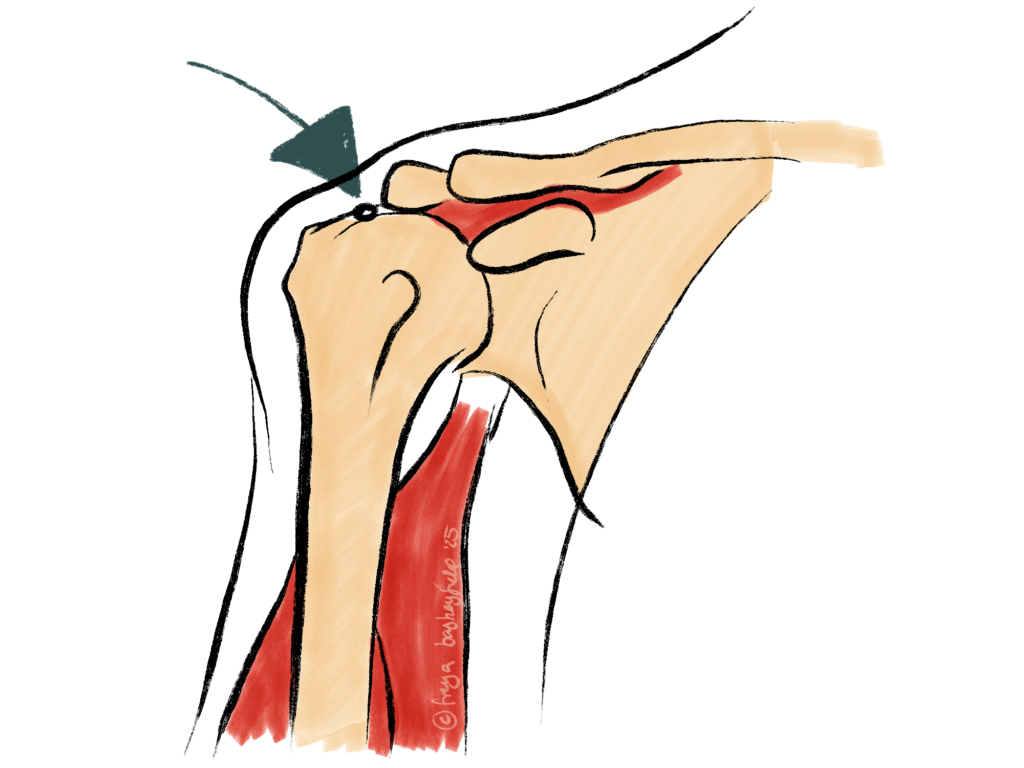
The most commonly affected tendons are in the rotator cuff. That’s the group of four muscles around the shoulder that rotate the arm. Of these four, supraspinatus is affected the most. The illustration above shows a calcium deposit in supraspinatus. But it’s worth noting that the location of pain doesn’t necessarily indicate where the issue is, as a number of shoulder issues cause pain on the tip of the shoulder, including calcific tendinopathy.
Symptoms
Symptoms vary depending on the stage of the condition. The onset of pain may be sudden or gradual, and may be accompanied by stiffness. Pain may be worse in the morning, but this is more likely to be associated with sleeping on the irritated side than due to inflammation.
Symptoms themselves may come and go, as the body is able to reabsorb some of the calcium. Movements typically affected by calcific tendinopathy include:
- reaching overhead
- lifting with an extended arm
- difficulty getting dressed or washing hair
- pain causing limited movement
Could It Be Something Else?
Shoulder pain has many possible causes, which is why assessment is so important. The pain can sometimes travel down the upper arm, making it difficult to tell whether the problem is coming from the shoulder or the neck. Unsurprisingly, symptoms are very similar to rotator cuff tears or strains. There’s also a lot of crossover with frozen shoulder, bursitis, arthritis, labrum tears, and thoracic outlet syndrome.
Each of these conditions requires a slightly different management approach. Beverley will take a full history and examine your shoulder movements before making a diagnosis. If further investigations such as an X-ray or ultrasound scan would be helpful, she can advise you accordingly.
How Osteopathy Can Help
Although osteopathy cannot remove the calcium deposit itself, it can help improve the way the shoulder functions while the tendon heals. When one part of the shoulder becomes painful, it’s not unusual for other muscles to tighten in an attempt to protect the area. This can reduce movement further and sometimes lead to secondary pain in the neck, upper back, or opposite shoulder.
Beverley takes a whole-body approach, assessing not just the painful shoulder but also the movement of the neck, upper back, ribs, and shoulder blade. If these areas are not moving efficiently, they can increase the demands placed on the injured tendon.
Treatment may include gentle manual therapy to improve movement, soft tissue techniques to reduce muscle tension, and exercises to gradually restore strength and confidence. Beverley will also discuss ways to modify aggravating activities without asking you to stop moving altogether, as appropriate loading is an important part of tendon recovery.