
One of the cornerstones of Osteopathy is recognising that everything in the body is connected, and nothing exists within a vacuum. This means that if there’s something going on in one part of the body, it will have an effect elsewhere.
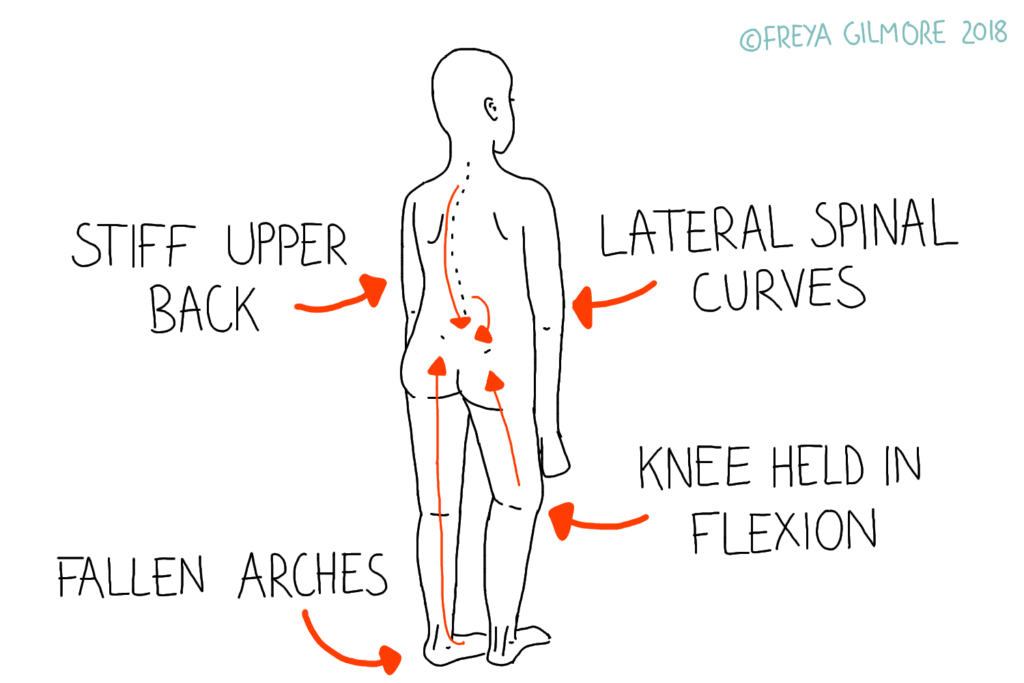
Common Mechanical Patterns
There are a few patterns we see often. One simple example involves the ITB: the iliotibial band. The ITB is the band of tissue that runs down the outside of the thigh, crossing the knee joint and blending into a muscle on the outside of the hip joint. Due to its positioning, it’s easily influenced by the hip and knee joints. ITB pain often develops in response to an underlying knee injury. It might also arise due to a hip issue.
Another common pattern stems from hip arthritis. Osteoarthritis in the hip often goes unnoticed until it causes a pattern in the rest of the body. The brain likes to avoid discomfort, so in the early stages of OA, it adapts the posture to avoid the painful movement (hip extension). This causes the lower back to flatten, and the neck to extend to bring the head back up. All of this forms an “elderly” posture, associated with hunched shoulders. The posture is not particularly energy efficient, and can cause slower walking and aches and pains throughout the back and neck. If these unbalanced demands persist, they may expedite the onset of arthritis elsewhere.
In these cases, treating a single area may offer temporary relief, but lasting change requires addressing the broader pattern.
Seeing the Body as a Whole
This is where osteopathy stands out. Beverley does not simply ask “where does it hurt?” but “why is this area being overloaded?”. Restrictions in one region often force another area to work harder, leading to pain that seems unrelated to the original cause. Understanding if the symptomatic area needs unloading, stretching, or strengthening depends on a thorough investigation from your osteopath. Before your appointment, it might help to spend some time thinking about:
- when symptoms started
- if there were any possible triggers
- what makes things better or worse
- how symptoms have changed over time
Through the case history you and Beverley uncover, and her physical examination, the pieces will start to slot together. By assessing posture, joint movement, breathing patterns, and load transfer through the body, Beverley builds a more complete picture of what is driving symptoms.
Treatment, Relief, and Prevention
Osteopathic treatment aims to restore balance within the system. This may involve improving joint mobility, reducing unnecessary muscle tension, and supporting better movement strategies. All of these individual aims are dictated by the broader picture and how each element affects you specifically.
Just as importantly, Beverley helps patients understand their own patterns. Early intervention can reduce pain, improve efficiency, and slow the progression of degenerative change. Addressing the mechanical picture as a whole is often the key to preventing one problem from quietly becoming several.